Plarning How Plastic Bag Yarn Supports the Homeless and Reduces Landfill Waste

A thin plastic grocery bag can feel almost weightless in your hand. Multiply it by the bags tucked under kitchen sinks, blown against fences, caught in storm drains, and buried in landfills, and that weight starts to matter.
Plarning turns some of those bags into something useful.
The word plarn blends “plastic” and “yarn.” It describes strips of plastic bags that are cut, looped together, and used like yarn for crochet, knitting, or weaving. One of the most common plarning projects is a sleeping mat for people experiencing homelessness. These mats are lightweight, washable, water-resistant, and made from material many households already have.
Plarning will not solve homelessness. It will not erase the broader problem of plastic waste. But it does offer a practical way for communities to care for neighbors while keeping some plastic bags out of the trash stream.

What plarning means and why people do it
Plarning starts with collecting plastic shopping bags, bread bags, newspaper sleeves, or similar flexible plastic. The bags are cleaned, flattened, cut into strips, and tied or looped into one long strand. That strand becomes a kind of plastic yarn.
From there, people crochet, knit, braid, or weave the plarn into useful items. Sleeping mats are the best-known project, but plarn can also become tote bags, seat pads, baskets, pet mats, and outdoor cushions.
The appeal is simple. Plarning uses a common waste item and turns it into something durable. It also gives volunteers a hands-on way to contribute, even if they cannot donate large amounts of money or time.
A single sleeping mat often takes hundreds of bags and many hours to complete. That time matters. The finished product carries a message beyond its function: someone spent hours making this because another person’s comfort matters.
How plastic bags become plastic yarn
The process is low-cost, but it works best when people follow a few careful steps. Poorly prepared plarn can be weak, dirty, or uncomfortable. Good plarn makes stronger projects and safer donations.
Collect bags that are clean and flexible
Most plarn makers use soft plastic bags that stretch slightly when pulled. Grocery bags are common because they are easy to cut and loop. Bags should be clean, dry, and free from food residue, grease, sharp pieces, or strong odors.
Bags that held chemicals, raw meat, pet waste, or spilled liquids should not be used for items meant for people. A mat may sit close to someone’s hands, face, clothing, and bedding. Clean material is basic respect.
Common usable materials include:
Plastic grocery bags
Retail carryout bags without heavy ink or thick handles
Newspaper delivery sleeves
Clean bread bags
Lightweight produce bags, if they are not too thin
Thicker plastic can work for some projects, but it may be stiff and hard on the hands.
Flatten and cut the bags into loops
Many plarn makers use the loop method. The bag is flattened, the handles and bottom seam are removed, and the remaining tube is cut across into rings. Each ring becomes one loop.
The loop width affects the final texture. Wider strips create thicker plarn and faster projects. Narrower strips create softer, more flexible work but take longer.
For sleeping mats, consistency helps. If strips vary too much, some areas may feel bulky while others feel thin. A steady width makes the finished mat more even.
Connect the loops into one long strand
The loops are joined with a simple knot-like connection. One loop passes through another, then folds back through itself. When pulled gently, the two loops lock together.
This creates a long strand of plarn that can be rolled into a ball. Rolling helps prevent tangles and makes it easier to crochet or knit.
The strand should be firm but not overstretched. Pulling too hard can weaken the plastic before the project even begins.
Crochet, knit, or weave the final item
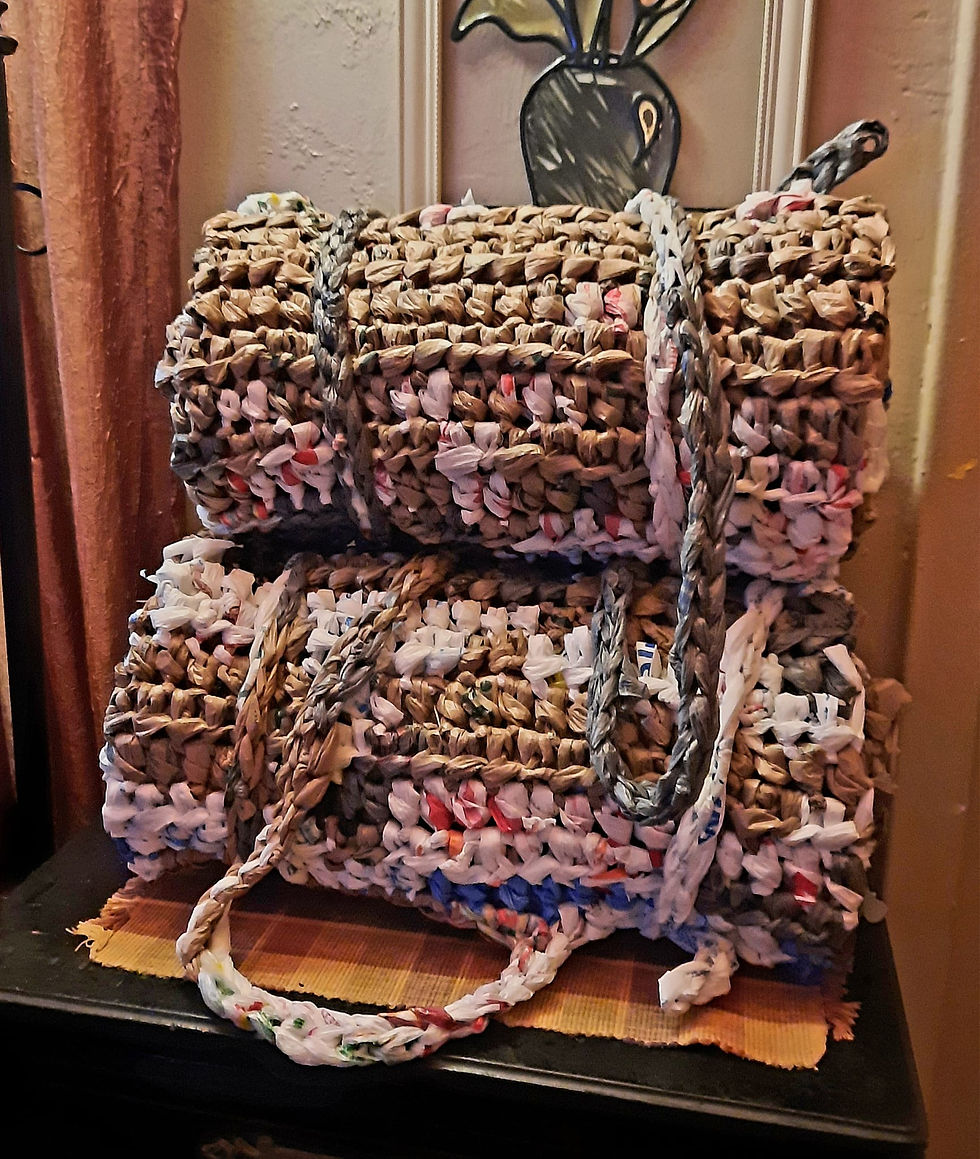
Many groups crochet sleeping mats because crochet handles bulky material well. A large hook can turn plarn into a thick, cushioned surface. The finished mat is usually rolled up and tied for transport.
Some makers add carrying straps made from plarn. Others add a small label explaining what the mat is made from and how to clean it. If a local outreach group has preferences, those should guide the final design.
Why plarn mats can help people experiencing homelessness
For someone sleeping outside or in temporary conditions, the ground is more than uncomfortable. It can be cold, damp, dirty, and hard. A plarn mat creates a barrier between a person and the surface beneath them.
That barrier is not a home, and it should never be treated as a substitute for housing. Still, it can help in real, practical ways.
They create a water-resistant layer
Plastic does not absorb water the way fabric or cardboard does. A plarn mat can help keep moisture from soaking up from pavement, grass, or dirt. That can make rest less harsh during damp weather.
This matters because wet bedding becomes heavy, cold, and difficult to dry. A mat that can be shaken off or wiped down is useful for people who have limited access to laundry and storage.
They add cushioning and insulation
A crocheted plastic mat has texture and loft. It creates a small pocket of separation from the ground. That may reduce pressure on hips, shoulders, knees, and backs.
The mat also works as a basic insulating layer. It does not replace warm bedding, but it can help reduce direct contact with cold surfaces.
They are lightweight and portable
Many people experiencing homelessness carry most of what they own. A donation that is bulky, heavy, or difficult to roll may not get used. Plarn mats are often light for their size and can be rolled for carrying.
Portability is not a small detail. A useful item must fit the reality of daily movement, shelter rules, public space restrictions, and personal safety.
They are washable and pest-resistant
Fabric bedding can hold moisture, odors, and pests. Plastic mats are easier to rinse, hang, and dry. That sanitary benefit is one reason plarn mats appeal to outreach groups.
They are not perfect. Plastic can still get dirty, tear, or wear down. But compared with cardboard or soaked fabric, a plarn mat is often easier to maintain.
They offer dignity through handmade care
There is also a human side. A handmade mat says that someone took the time to prepare, cut, loop, and stitch hundreds of pieces together. That does not erase hardship, but it can communicate care in a direct way.
People experiencing homelessness are often treated as invisible. A well-made donation acknowledges comfort, cleanliness, and dignity as real needs.
How plarning reduces landfill waste
Plastic bags create problems because they are lightweight, flexible, and slow to break down. They can escape trash bins, clog sorting equipment, drift into waterways, and persist in the environment for a long time.
Many curbside recycling programs do not accept plastic bags because they wrap around machinery. Some stores and drop-off programs collect clean film plastic, but access varies by location. As a result, many bags end up in landfills or as litter.
Plarning gives some of that plastic a second use.
A plarn mat does not make plastic bags harmless, but it can extend their life as a useful item instead of sending them straight to waste.
The environmental impact comes from several small gains working together.
It diverts bags from the trash. Every bag used in a mat is one fewer bag headed directly to a landfill, trash incinerator, or the environment.
It raises awareness. When people see how many bags it takes to make one item, plastic consumption becomes visible. A drawer full of bags feels small. A mat made from hundreds of them tells a different story.
It encourages better sorting. Plarning groups often teach volunteers which plastics are usable, which should go to store drop-off programs, and which belong in the trash. That education can reduce contamination in recycling streams.
It supports reuse before disposal. Reuse is often more practical than trying to recycle dirty or mixed soft plastic. Plarning does not require industrial processing. It relies on time, care, and simple tools.
This is why Plarning How Plastic Bag Yarn Supports the Homeless and Reduces Landfill Waste is more than a craft topic. It connects personal habits, local giving, and waste reduction in one visible project.
What plarning does not solve
Plarning is helpful, but it has limits. Honest conversations make the practice stronger.
A plarn mat does not replace permanent housing, mental health care, living wages, medical care, addiction support, or domestic violence services. It should be seen as harm reduction, not a solution to homelessness itself.
Plarning also does not remove the need to reduce plastic use. Reusing bags is good, but fewer single-use bags in the first place is better. If a community makes mats while still using unnecessary plastic every day, the project becomes only a partial answer.
Quality matters too. A poorly made mat can stretch, snag, or fall apart. Dirty bags can create hygiene issues. Sharp edges or stiff knots can make a mat uncomfortable. A donation meant to help should be made with care.
How community groups can make plarning more effective
The best plarning projects usually involve coordination. They are not just craft circles making items and hoping someone can use them. They connect with shelters, street outreach teams, faith groups, mutual aid networks, and local service providers.
Before making dozens of mats, groups should ask a few practical questions:
Do local outreach workers need sleeping mats right now?
What size is most useful?
Should mats include carrying straps?
Are there places where plastic mats are not allowed?
How should finished mats be cleaned and packaged?
Where and when should donations be delivered?
These questions prevent waste. They also respect the experience of people who work directly with unhoused neighbors.
Good plarning groups also build simple standards. For example, they may accept only clean bags, use a consistent strip width, check finished mats for sharp knots, and store completed items in dry spaces.
A project can also include different jobs for different abilities. Some volunteers collect bags. Others wipe and sort them. Some cut loops. Others connect plarn balls. Experienced makers crochet the mats. This makes the work accessible to more people while keeping quality high.
How to start plarning at home
A person can begin with only a few supplies:
Clean plastic bags
Scissors or a rotary cutter
A flat cutting surface
A large crochet hook, knitting needles, or a simple loom
A bag or bin for storing plarn balls
Start small. Make a sample square before attempting a full mat. This helps you learn how wide to cut strips, how tightly to stitch, and how the plastic behaves.
If the goal is donation, connect with a local organization before making a large item. Needs vary. Some groups may already have mat patterns. Others may need different supplies more urgently.
If mats are not needed locally, plarn can still serve other uses. Outdoor seat cushions, reusable market bags, or storage baskets can keep plastic in use. The key is making something durable enough to justify the time and material.
A small practice with a visible impact
Plarning sits at the meeting point of care and reuse. It takes a common waste item and turns it into something that can offer comfort, cleanliness, and portability to a person living without stable shelter.
Its power comes from being specific. A plastic bag becomes a strip. A strip becomes plarn. Plarn becomes a mat. A mat becomes a dry place to rest.
That chain does not fix every problem connected to homelessness or plastic waste. But it does make both problems harder to ignore. It gives communities a way to act with their hands, reduce some landfill waste, and show practical respect for people too often left outside systems of care.
The best next step is simple: use fewer plastic bags when possible, save clean ones when you have them, and ask local outreach groups what they actually need. Then, if plarning fits that need, turn the bags into something useful, one loop at a time.


Comments